Tech events around the world this year have placed a growing focus on robotics and AI, especially systems that can adapt to real-world situations. For instance, at CES 2026, Boston Dynamics showcased Atlas, its humanoid robot performing complex tasks while adjusting its movements in real time.
Atlas was able to handle small variations in its environment without breaking its flow, whether it was changes in balance, object position, or movement sequence. Instead of following a fixed set of instructions, it adjusted its actions as needed.
This reflects a broader shift in robotics, from rigid, rule-based systems to models that learn from data. As robots move into real-world environments, how they are trained is becoming just as important as what they are designed to do.
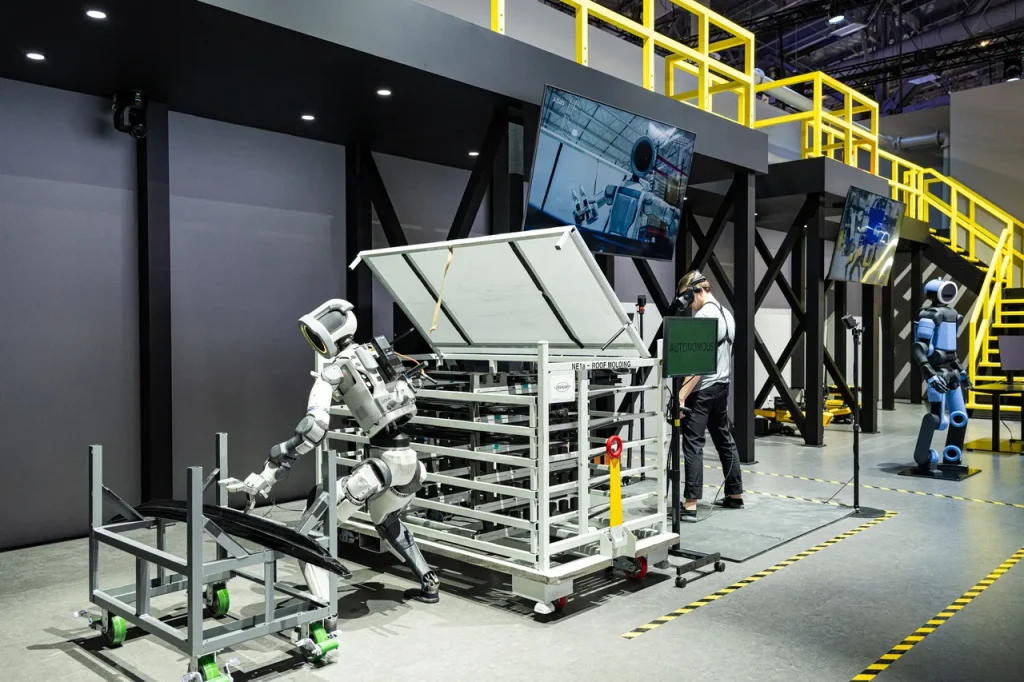
A Look at Atlas Performing Tasks at CSE 2026 (Source)
When we consider training models, there’s often an automatic focus on algorithms and architectures. However, an equally important factor is the data used to train robots. The way actions are captured and represented directly influences how well robots can learn and adapt in real-world settings.
Two approaches that are widely used today are motion capture (MoCap) and egocentric data. Motion capture records precise human movements using external tracking systems, while egocentric data captures tasks from a first-person perspective, adding real-world context.
Both types of data aim to teach robots how to act, but they capture information in very different ways. Let’s take a closer look at motion capture and egocentric data, and what they mean for the future of robotics training.
Motion capture data, or MoCap data, records how a person moves in detail. It breaks down an action into smaller parts, showing how each movement happens from start to finish.
It uses sensors, body markers, or camera systems to track different parts of the body while a person performs a task. This creates data about joint positions, body movement, hand motion, and the path of each action.
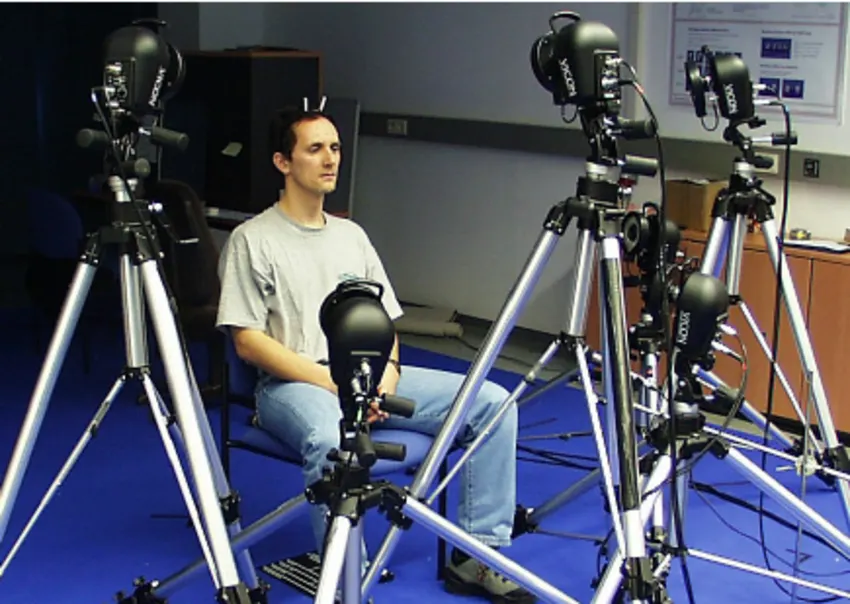
A Motion Capture Camera Setup (Source)
In simple terms, MoCap data maps how an action flows step by step. It is commonly used in areas where accuracy matters, such as studying human motion or creating realistic animations.
When it comes to robotics, MoCap data helps teach robots how to perform tasks by providing clear examples of human movement. For instance, it can record someone using tools or assembling parts. This allows robots to learn movements with high precision and consistency.
Alongside motion capture, another key data approach in robotics training is egocentric data. We’ve explored this in detail previously, but here’s a quick refresher.
Egocentric data captures tasks from a first-person point of view, showing them as they are seen and performed. It enables robots to learn from the same perspective as the person doing the task.
This data is usually recorded using head-mounted or onboard cameras that move with the user. Along with the action, it also captures context like where objects are placed, how hands interact, and how a scene changes in real time.
For example, when picking up a tool from a table, the data shows how the hand reaches for it, where the tool is placed, and what the workspace looks like from that perspective. This added context lets robots better understand tasks and adapt to real-world situations.
Next, let’s walk through how these two robot data approaches differ and how that impacts training robots.
One of the main differences is perspective. Motion capture data records movement from a third-person view, while egocentric data captures tasks from a first-person perspective, showing how they happen in real time.
Because of this, the type of data they capture is also different. MoCap data focuses on structured motion data like joint positions and movement paths. Egocentric data captures visual information, object placement, and interactions during a task.
This affects how each type of data is used in training. MoCap data is precise and consistent, which works well in controlled environments. Egocentric data reflects real-world situations, where tasks can vary and don’t always follow the same steps.
Consider a simple task like folding clothes. MoCap data would record the movement of the arms as they follow a set pattern while folding. But, egocentric data would show how the task actually rolls out, adjusting the fabric, aligning edges, and making small corrections along the way.
As you learn about the differences between MoCap data and egocentric data, you might wonder where motion capture data works best for robotics training.
MoCap data works best in situations where movements need to be learned with high accuracy. Since the data is detailed and consistent, it enables systems to understand actions in a consistent and repeatable way, with minimal early variation.
This becomes particularly useful for tasks involving coordination or sequence. When multiple joints move together, or actions follow a fixed order, structured motion data helps connect each step clearly. It also plays a key role in replicating human-like motion, as timing and form need to stay aligned.
That same level of detail becomes critical in fine motor tasks. Even small adjustments in movement can change the outcome, and motion tracking helps systems execute those actions more reliably. That’s why MoCap data fits best in more structured environments, where processes are well-defined and need to be performed consistently.
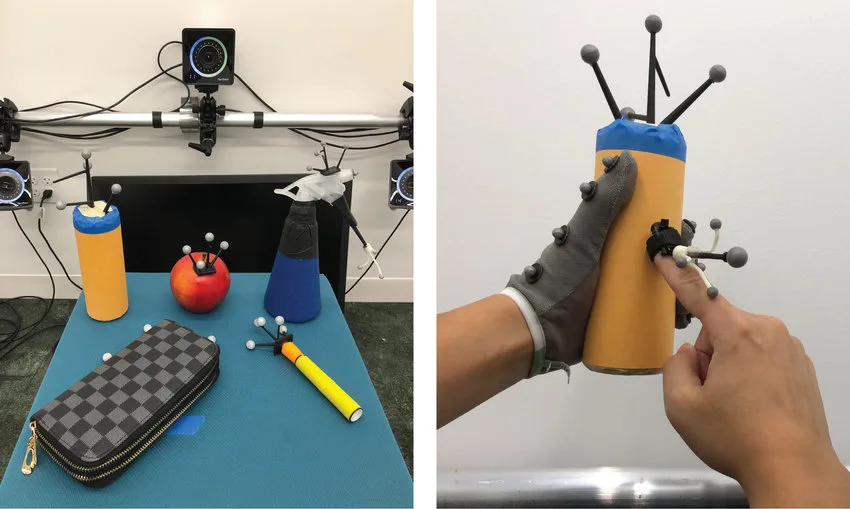
Motion Capture Tracking of Hands and Objects for Precise Robot Training (Source)
This also makes it well-suited for repetitive tasks and simulation-based workflows. The consistency of the data makes it possible for models to be trained and tested without too much variation early on. Overall, MoCap data is most useful when the goal is to teach systems how to move with accuracy and control.
Next, let’s explore how egocentric data supports robotics training in real-world settings.
Egocentric data allows robots to learn from how tasks unfold in everyday environments, where setups can change from one moment to the next. Because of this, robots trained on this data are better at handling variation.
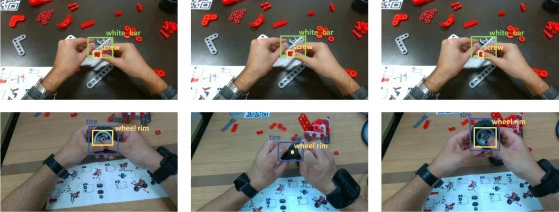
Examples of Egocentric Images for Human Behavior Understanding (Source)
They can adjust when objects are in different positions, when steps don’t follow a fixed order, or when small changes affect how a task is completed. This becomes especially useful in environments like logistics, retail, and homes, where conditions keep changing, and tasks need to be handled flexibly.
Over time, this approach helps systems rely less on fixed instructions and more on understanding what needs to be done in the moment. Simply put, egocentric data is great for teaching robots how to behave in dynamic environments, where adaptability matters more than consistency.
While each robot data approach has its own strengths, real-world tasks often require more than just one type of data. In the real world, robots rarely get all the information they need from a single data source.
For example, movement data can show how an action is performed, but it doesn’t always capture the environment in which it happens. This is where multimodal learning comes in. By combining different types of data, robots can learn both how to move and how the environment behaves during a task.
Let’s say you are training a robot to pick up fragile items from a cluttered shelf. Motion capture data can provide the precision needed to move the arm smoothly and safely, while egocentric data can help the robot understand where objects are, avoid obstacles, and adjust its grip based on what’s happening in the environment.
Together, this gives the robot a clearer understanding of both how to move and what’s happening around it. As a result, it can handle unexpected changes and perform more complex tasks with greater reliability. This combined approach plays a crucial role in building more capable and adaptable robotics systems.
These approaches aren’t just theoretical; they’re already being used in real-world applications. Let’s explore where MoCap data and egocentric data are making a difference.
Robots in manufacturing aren’t just executing tasks. They’re learning to replicate the precise motions of skilled workers. As these systems operate in changing environments, having the right kind of data becomes critical to maintaining consistent performance.
That’s exactly why combining different types of data becomes vital. An interesting example was demonstrated at NVIDIA’s National Robotics Week 2026, where several real-world use cases showed how industrial robots are becoming more adaptable.
Doosan Robotics highlighted how palletizing systems are moving beyond fixed routines. Instead of handling every box the same way, the robot uses visual input from a single camera image to assess each item. This allows it to detect damage, estimate weight and fragility, and adjust how each box is handled, including placement, speed, and grip.
This kind of adaptability shows the growing role of egocentric data in manufacturing. While predefined motion helps maintain consistency, understanding the environment allows robots to adjust their actions as they work.
Warehouses are rarely still. Inventory moves, layouts shift, and paths that were clear a few minutes ago can quickly become blocked. In the middle of this, robots are expected to pick, place, and move items without slowing things down.
To keep up, robots need to perform tasks consistently while also adapting to what’s happening around them. For example, Amazon warehouse robots use real-time data to identify items, navigate shelves, and handle picking and packing tasks.
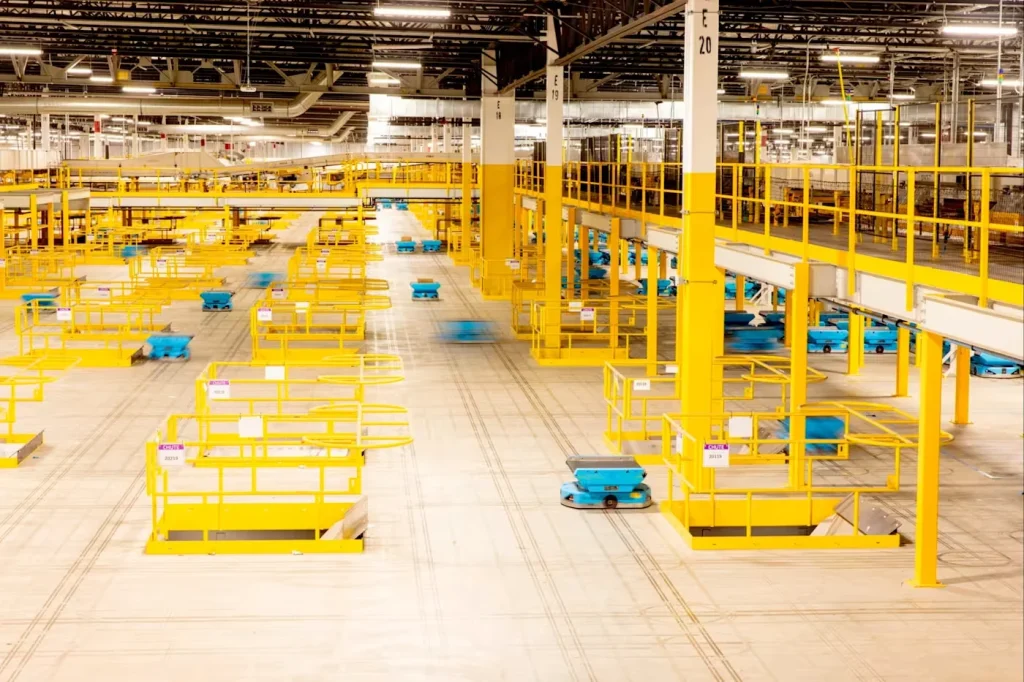
Robots Handling Packages in Amazon Warehouses (Source)
At the same time, visual and situational inputs give them better awareness of their surroundings. This lets robots adjust their actions as needed and keep operations running smoothly, even as conditions change.
Healthcare robots are often used to assist with precise tasks, but they also operate much closer to people than machines in many other environments. This changes what they need to learn and how they are trained.
Take a robot assisting in minimally invasive surgery. The task requires steady, highly controlled movements, but the environment can still change in subtle ways. The robot needs to respond to these changes while maintaining accuracy.
This is where structured motion data becomes important. It defines how a movement should be performed, capturing the exact path, speed, and positioning of surgical instruments. This gives the robot a clear reference for precision.
At the same time, an egocentric perspective adds more context. It shows how the instrument aligns with the body and how the scene changes moment to moment. This helps the robot stay accurate while adjusting to what’s happening in real time.
Motion capture data and egocentric data are both valuable for training robots, but each comes with its own set of challenges. From setup constraints to real-world inconsistencies, these factors can define how effectively robots learn from data.
Here are some challenges to consider with respect to motion capture data:
Similarly, here are some challenges to keep in mind for egocentric data:
If you’re building robotics or embodied AI systems, having the right data is essential from the start. From capturing real-world interactions to turning them into usable training inputs, every step needs a clear and reliable workflow.
At Objectways, we handle data collection and annotation across all types of robotics data, including egocentric data, motion capture data, and teleoperation data. This removes common roadblocks and helps teams move quickly toward real-world deployment.
Robotics training is moving beyond one-size-fits-all data strategies. With real-world performance becoming critical, data strategies are evolving to keep up.
We’re already seeing a shift toward hybrid data collection methods, in which MoCap data and egocentric data work together rather than compete. MoCap delivers controlled precision, while egocentric data reflects real-world context. Both are needed for well-rounded training.
Interestingly, the rise of embodied AI systems is pushing the need for data that reflects real interactions. This is where continuous learning loops come in, helping models improve through ongoing feedback and real-world inputs.
To put it simply, the future of robotics isn’t about choosing one approach over another. It’s about building flexible, integrated pipelines that can adapt as robotics systems grow more capable and complex.
MoCap data and egocentric data complement each other in shaping the future of robotics. By blending structured motion with real-world experience, systems gain both precision and adaptability.
Today, advanced robotics relies on this balance, where accuracy meets context, learning becomes more effective, and robots are ready for the challenges of the real world. The future of robotics belongs to approaches that blend structured motion with lived experience, because when precision meets context, robots don’t just learn, they actually understand.
Exploring MoCap data or egocentric data for robotics training? Take a look at some of our egocentric dataset samples and connect with us to see how we can support your data workflows from capture to deployment.
The future of robotics is about smarter, more adaptable systems that can learn from multiple types of data. For instance, precise motion capture, first-person experiences, and sensors, so they can handle real-world tasks reliably.

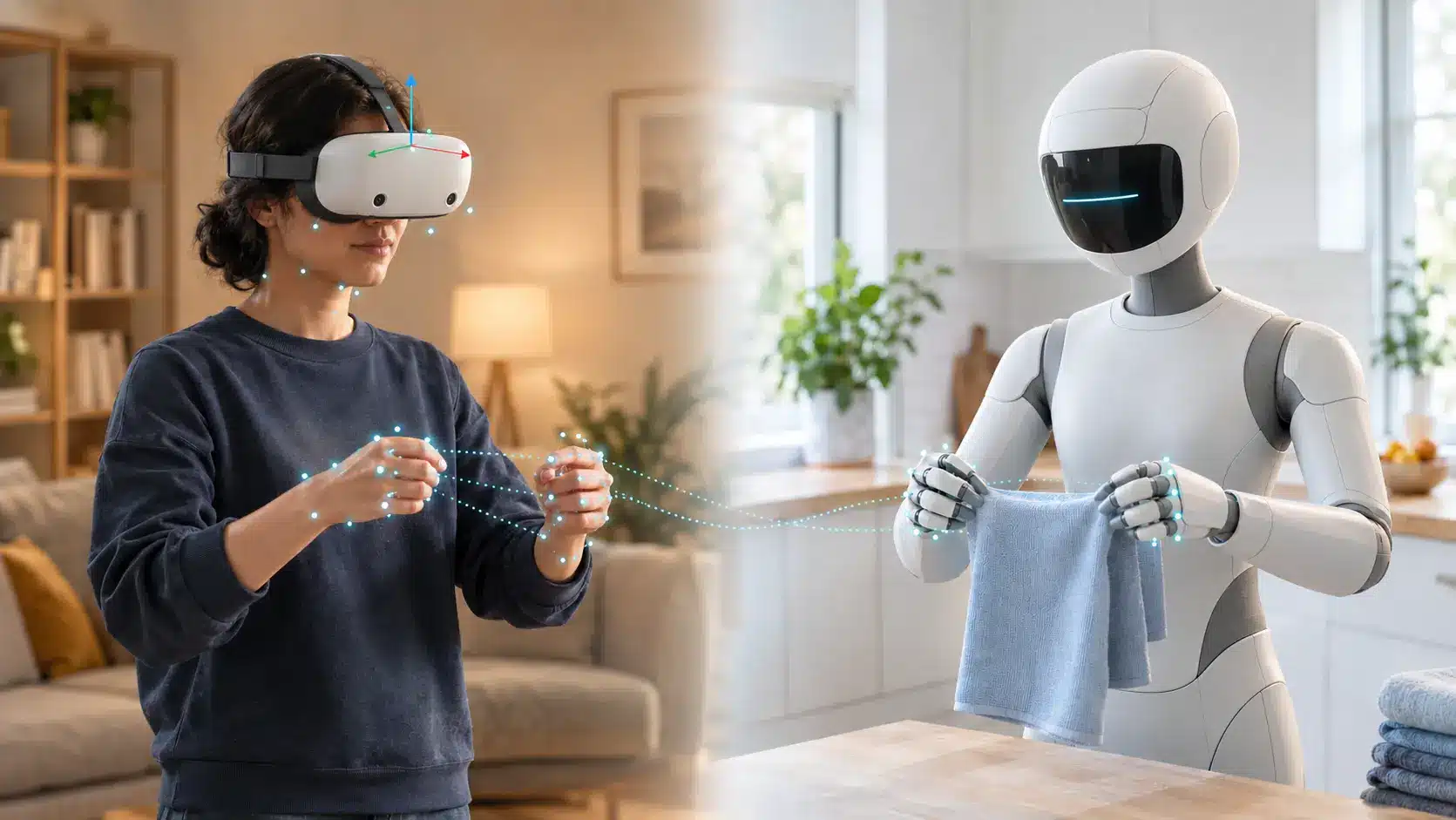
See how SLAM VR tracking works inside a headset, where it fails, and why a drifting head pose weakens egocentric and teleoperation data.
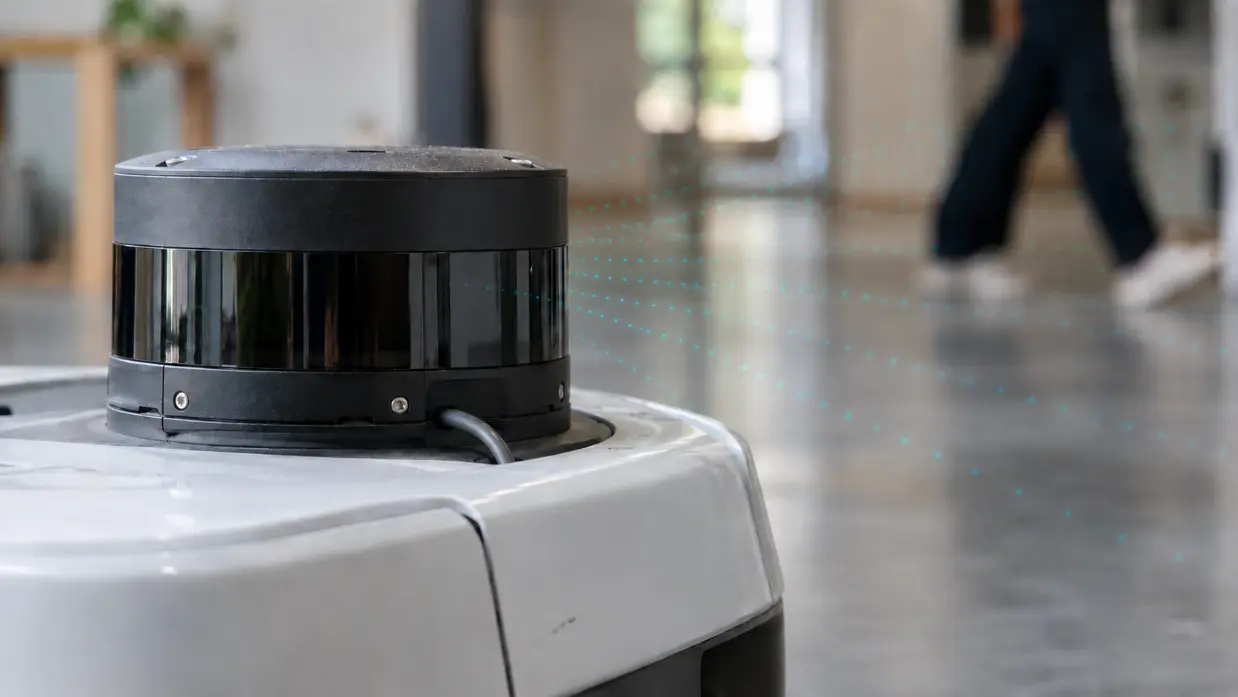
Explore the main types of lidar sensors, how they measure distance, and which types of robots are best suited to 2D, 3D, flash, and FMCW...