There is a clear trend around the growing need for robot data in the AI industry today. On one hand, cutting-edge robotics applications are being enabled by increasingly capable models and algorithms. On the other hand, these same applications are still limited by a lack of data.
A key reason behind this robot data trend is that many business leaders are exploring how to bring physical intelligence into their daily operations. Physical intelligence is the ability of machines to perceive, interact with, and adapt to the real world.
Unlike traditional AI systems that rely on static or synthetic datasets, physical intelligence depends on real-world experience. Robots need data that reflects how actions actually happen, how objects behave, and how environments change over time.
Naturally, this makes robot data collection a crucial part of building physically intelligent systems. Different ways of collecting robot data provide distinct learning signals. Some methods focus on showing how tasks are performed, while others help robots learn through interaction, feedback, and trial and error.
Let’s dive in and explore various methods of data collection and how they drive physical intelligence in robotics.
Physical intelligence is the ability of an AI system (mainly robots) to understand, interact with, and operate in the real world. It handles dynamic and unpredictable environments where actions have real consequences.
An essential idea behind physical intelligence is that it requires experience beyond computation. These systems don’t just learn from large datasets; they improve by interacting with their surroundings, a lot like how humans do. Through trial, feedback, and adaptation, they become better at handling real-world tasks.
Warehouse robots are great examples of physical intelligence systems. They can easily adjust their grip and navigate around obstacles in real time while handling packages.
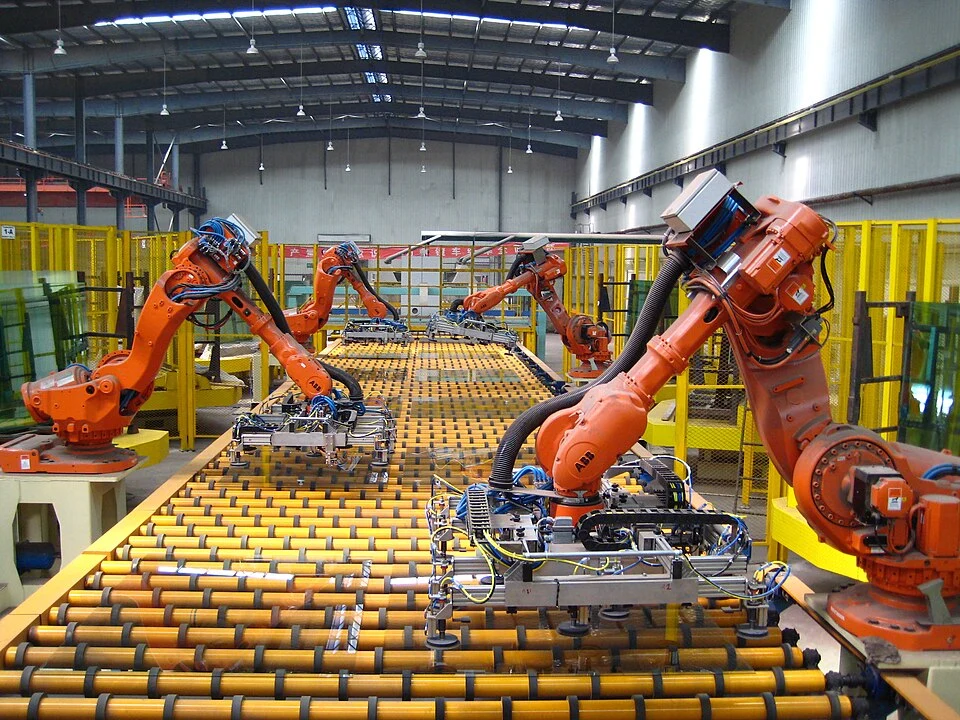
Warehouse robots can use physical intelligence to handle objects. (Source)
Here’s a look at the three main components used to build physical intelligence systems:
The reason why these components are important is that physically intelligent systems operate in dynamic, real-world environments that are constantly changing. They have to interact with their surroundings, respond to uncertainty, and adapt their actions in real time.
Physical intelligence is used across many real-world industries. Here are a few examples:
Data collection makes it possible to gather real-world data that helps robots learn and operate in changing environments. This data lets AI models pick up patterns and perform tasks, even when conditions aren’t perfect.
For this to work well, robot data needs to capture both perception and action. It isn’t enough for a system to simply see the world. It also needs to capture how it moves, responds, and interacts with its surroundings. This connects what the robot sees with what it does.
On top of this, high-quality data collection plays a vital role in how robots perform. When data is accurate, varied, and well-structured, robots can handle more situations and behave more consistently in real-world settings.
However, collecting this type of data comes with challenges. One common issue is limited real-world variability. Many datasets don’t include enough variation across different scenarios, which makes it harder for robots to adapt.
Another challenge is the simulation gap. Models trained in simulated environments may not perform well in the real world due to differences in physics, lighting, and visual details.
These challenges are why using a mix of data collection methods is important. Different robot data approaches capture different aspects of how robots perceive and interact with the world, leading to better learning overall.
Some of the main types of data collected for building physical intelligence in robotics include egocentric data, teleoperation data, RGB-D data, gripper-based data, and motion capture (MoCap) data.
Next, let’s take a closer look at how each of these types of robot data is collected.
Egocentric data collection refers to collecting data from a first-person point of view. It is like seeing the world through the eyes of a robot or a person while they are doing a task.
This type of data is usually videos that show what the robot or person sees, along with how they move and interact with things around them. Egocentric data showcases what is happening and how actions are done step by step.
By learning from this view, robots can understand what to do based on what they see. It lets them connect seeing and doing, which is important for real-world tasks. A well-known example of an egocentric dataset is the Ego4D dataset, which provides large-scale first-person video data for learning from human experiences.

Categories of Egocentric Data from the Ego4D Dataset (Source)
Teleoperation data collection involves a human controlling a robot from a distance while it performs a task. This setup allows the system to capture how people carry out tasks in real-world situations through the robot’s actions.
The data collected includes how the robot moves, the inputs given by the human operator, and any adjustments made during the task. This captures what actions were taken, along with how they were changed and improved in real time.
By learning from repeated demonstrations, robots can build more reliable ways of completing tasks without needing every step to be programmed in advance. Research in robotic grasping, including large-scale efforts, has shown how this type of data can help robots learn hand-eye coordination.

A Look at Robots That Have Learned Grasping Using Teleoperated Data (Source)
RGB-D data collection combines standard visual input (RGB, which is Red, Green, and Blue) with depth sensing (D). It can provide robots with a more complete view of their environment. The added depth data lets them understand distances and spatial layout.
This data captures both appearance and structure, what objects look like and where they are, making it essential for real-world interaction. It’s widely used for tasks like object detection, navigation, and manipulation, assisting robots in identifying objects more accurately, moving safely, and handling items with greater precision.
By combining visual and depth information, RGB-D helps bridge the gap between perception and spatial understanding. Using such a combination of data means robots can evolve from simply recognizing scenes to actively interacting with them.
For example, in agricultural robotics, RGB-D cameras mounted on robots collect synchronized color images and depth-based point clouds as they move through fields. This data is used for tasks like detecting crops, localization, and mapping, so the robots can navigate and operate in complex outdoor environments.

An Agricultural Robot That Uses RGB-D Data for Various Tasks (Source)
Universal Manipulation Interface (UMI) gripper-based data collection focuses on capturing how robotic grippers interact with objects. Using this data, robots can learn how to handle items in the real world.
This type of data collection involves recording detailed manipulation data, including grasping patterns, force, contact, and full action sequences. UMI gripper data is especially useful for developing fine motor skills, improving object handling, and enabling precise tasks like assembling components or handling fragile items.
By learning from these detailed interactions, robots can perform actions more accurately. Researchers have actually used the UMI framework to train robots to perform complex tasks, such as bimanual or long-horizon manipulation, and even generalize to new objects or settings without retraining.
You may be wondering how UMI-based data collection is different from other similar methods we discussed earlier. Unlike teleoperation, where humans control a robot directly, the data is tied to a robot’s kinematics and constraints.
Similarly, egocentric methods mainly capture visual perspective without precise interaction forces. However, UMI uses handheld, sensor-equipped grippers to record manipulation independently of any robot.

Handheld, Sensor-Equipped Grippers Record Data That Robots Later Use (Source)
Motion capture or MoCap is used to track human body and hand movements with high precision. Robots can use this to learn from how people naturally perform tasks. It captures detailed data such as joint positions, movement dynamics, and full-body coordination, providing a complete view of how actions are executed.
MoCap data is especially useful for training complex or hard-to-program tasks and for helping robots develop smoother, more natural, human-like movements. This motion data is usually collected using special suits (worn by experts) that contain sensors.
An added advantage of using MoCap data is that robots can closely replicate human behavior and improve both performance and adaptability.
DexCap is a popular research example of a portable MoCap data collection system. It is used to track precise hand and finger movements along with 3D environmental data, enabling scalable data collection for dexterous manipulation tasks.

A Robot Replicating Motion Captured by a Human (Source)
Combining multiple robot data collection methods can yield richer, more useful datasets for robotics. Each method captures a different part of how robots perceive and interact with the world. And bringing them together creates a more complete learning signal.
For example, pairing egocentric data with teleoperation connects perception with action. A system trained on such data can see from a first-person view and also learn how those observations translate into decisions and movements.
Similarly, combining RGB-D data with gripper-based collection links vision with manipulation, helping robots understand both the object’s visual structure and how to handle it.
Another interesting combination is MoCap with teleoperation, where detailed human movement is paired with actual robot execution. This bridges the gap between how humans move and how robots act.
In short, relying on a single data type can limit learning, but integrating multiple data sources makes robots more adaptable, capable, and better suited for a wide variety of real-world applications.
While robot data collection is critical for building physical intelligence, it isn’t always straightforward. Collecting useful, real-world data comes with several challenges that can affect how well robots learn and perform.
One of the biggest challenges is scale. Gathering large amounts of real-world data takes time, effort, and resources, especially when working with physical systems. Unlike digital data, which can be generated quickly, robot data has to be collected through real interactions.
Another challenge is data annotation. Labeling robot data, especially for motion, interaction, and 3D environments, can be complex and time-consuming. It often requires specialized tools and skilled teams to ensure accuracy.
Consistency and quality also play a big role. Differences in how data is collected, the environments used, or how it is labeled can impact how well models learn. On top of that, hardware and setup can be limiting. Robots, sensors, and data collection systems are often expensive and complex, which makes scaling harder.
Working with an AI data partner like Objectways helps take the complexity out of robot data collection. With the right tools, structured workflows, and experienced teams, it becomes easier to build high-quality datasets for physical intelligence systems.
At Objectways, we power large-scale robot data collection and labeling, enabling AI teams to build diverse, real-world datasets that reflect how systems operate in dynamic environments. From capturing rich interactions to managing complex data pipelines, our focus is on delivering data that is scalable and ready for training.
Our team of experts works with complex data types such as motion, depth, and interaction sequences. We also organize data in a way that connects perception, action, and learning. This makes it easier to develop models that can perform reliably in real-world conditions.
If you are looking to build high-quality datasets for physical intelligence, Objectways supports both data collection and annotation, turning raw robot data into datasets that are ready for real-world use.
Physical intelligence depends on diverse, high-quality data. The more varied and representative the data, the better robots can understand and operate in real-world environments.
Different robot data collection methods capture different aspects of perception, interaction, and execution. That’s why combining them is key to building more capable and adaptable systems.
At a high level, it all comes down to a simple loop: data drives learning, and learning drives action. When this cycle is built on reliable, well-structured data, robots can continuously improve and perform more effectively in real-world tasks, and with the right data partner like Objectways, building that foundation becomes faster and more scalable.
Are you working on robotics data pipelines or scaling real-world robot data collection? Reach out to Objectways to see how we can accelerate your robotics and AI initiatives.
Physical intelligence is the ability of an artificial system, like a robot, machine, or autonomous vehicle, to understand, reason, and act effectively in the complex and unpredictable physical world.

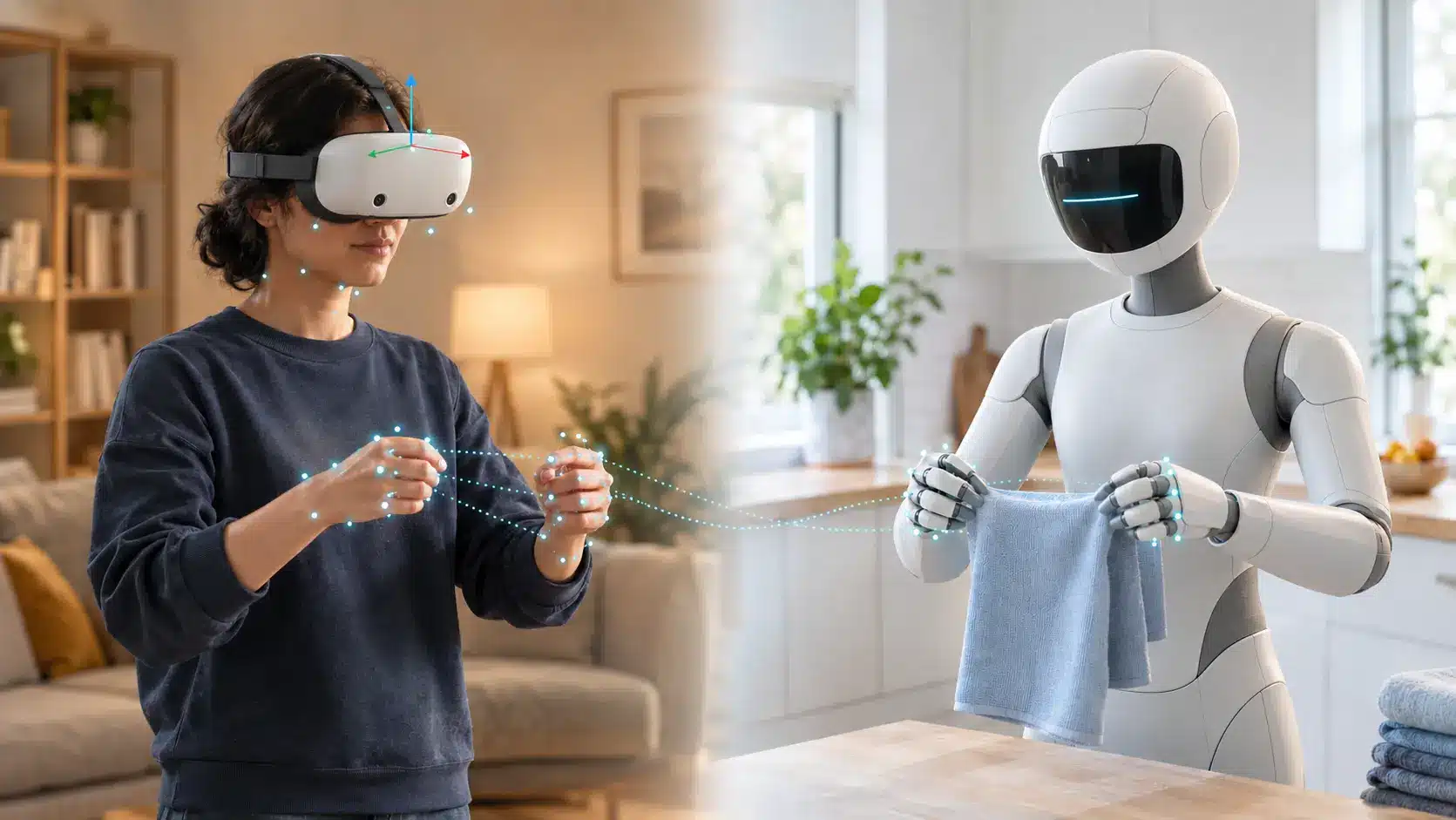
See how SLAM VR tracking works inside a headset, where it fails, and why a drifting head pose weakens egocentric and teleoperation data.
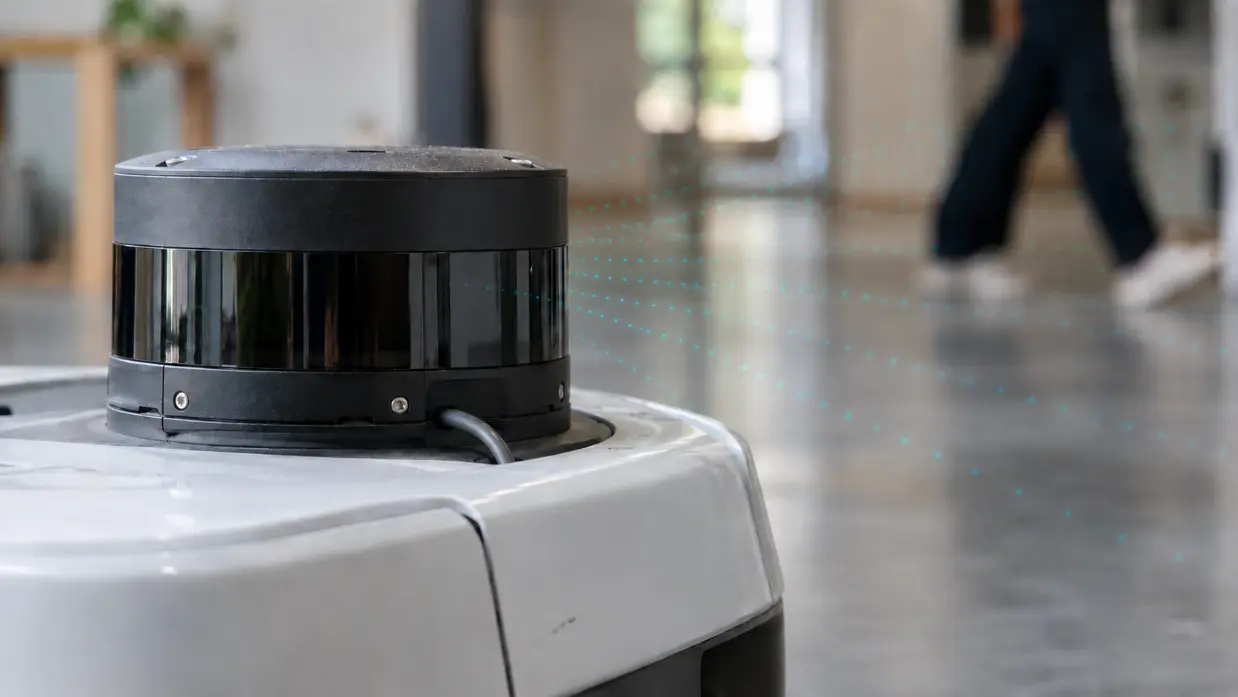
Explore the main types of lidar sensors, how they measure distance, and which types of robots are best suited to 2D, 3D, flash, and FMCW...