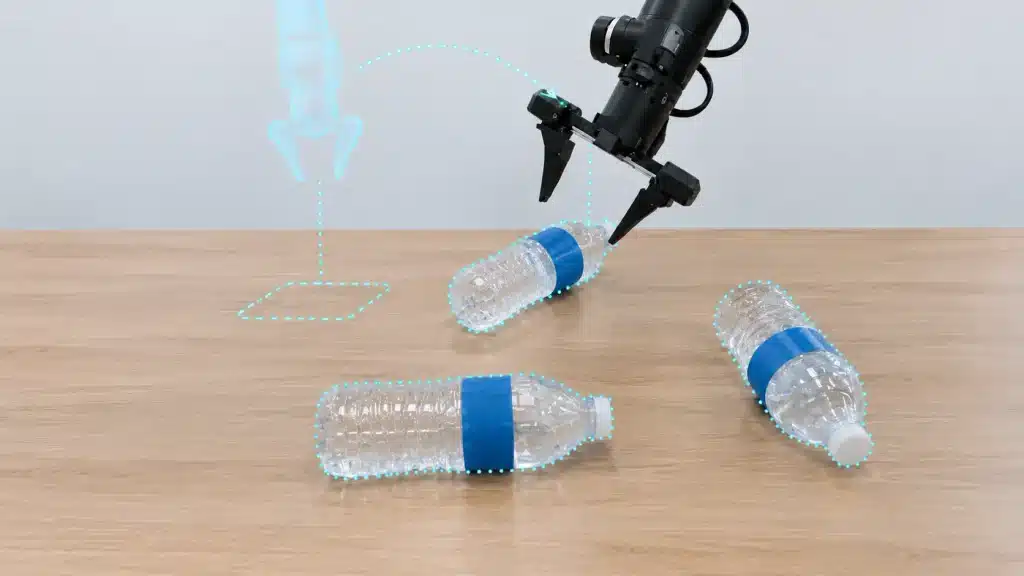
In a lab or on a factory floor, things rarely stay exactly where they’re expected to be. Picture a robot arm reaching for a water bottle on a table. Just before it closes its grip, the bottle rolls a few inches to the side.
Many robots would still close their grip on the empty spot where the bottle used to be. An adaptive robot notices the bottle has moved and reaches for it in its new position.
That small adjustment is the core idea behind adaptive robotics. It involves building robots that can sense changes around them and adjust their actions in real time. Rather than repeating the same programmed steps, they respond to what’s actually happening in front of them.
For example, Dyna Robotics reported that a robot running its DYNA-1 model folded more than 700 napkins in 24 hours, with a 99% success rate and no human intervention. A reward model tracked the robot’s progress throughout the task, helping it recognize mistakes and correct them along the way.
But how does a robot know when to change what it’s doing? Most explanations say that adaptive robots learn from their environment, but they rarely explain how that learning actually happens.
The answer lies in the data they’re trained on. Training data collected across different settings shows a robot what can change around it. Recorded human corrections show it how to recover when something goes wrong. Feedback signals, such as those from Dyna’s reward model, tell the robot whether it’s making progress toward its goal.
In this article, we’ll look at what adaptive robotics means, how robots learn to adjust their actions, and what data teams need to build robots that can respond when things don’t go as planned. Let’s get started!
An adaptive robot can detect changes during a task and adjust its next action. Cameras, force sensors, and AI models help it monitor what’s happening as it works. That way, it doesn’t have to rely on everything going exactly as planned.
For instance, a robot might need to pick up parts that don’t arrive in quite the same spot each time. Or something might bump into what it’s working on, and it has to stay on track. It might even need to take a skill it learned on one task and use it on a similar one.
Most industrial robots work differently. Engineers teach them a set of positions to follow in a particular order. If a part arrives at a different angle or a fixture shifts over time, the robot may no longer follow the right path. An engineer then has to stop the line and teach the robot the path again by hand.
Even cobots, or collaborative robots, often work this way. They’re built to share space with people, so they can slow down or stop if they bump into someone. But being safe around people doesn’t make them adaptive. Many still follow the same fixed program every cycle, just like traditional industrial robots.
General Motors shows what happens when a cobot can do both. The company has installed and tested FANUC CRX cobots that use AI vision to work on car parts as they move down an assembly line. The cobots can run down bolts, insert and tighten screws, and install filters, all without stopping the line.
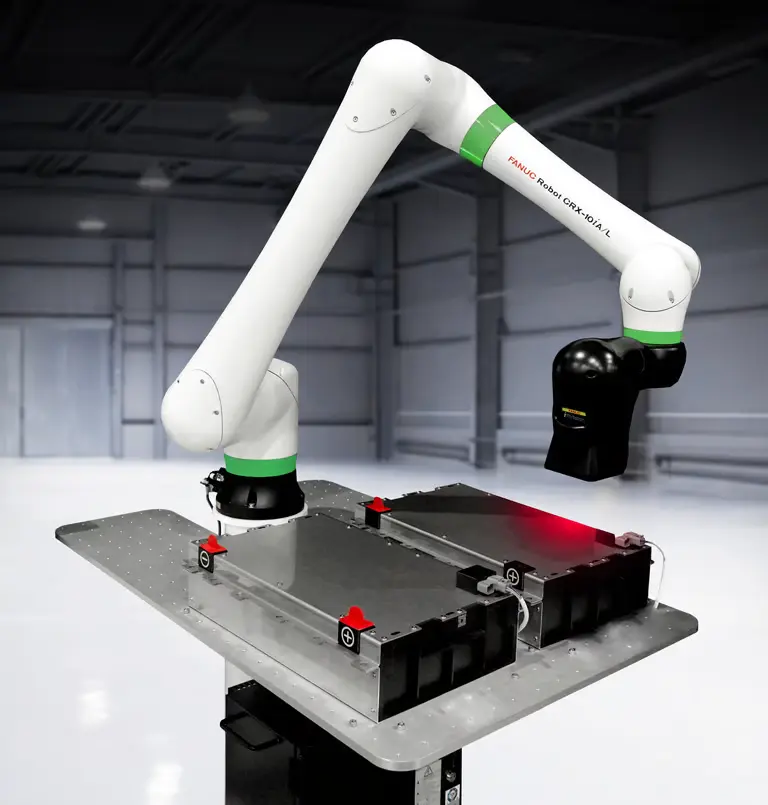
The key is how the cobots keep up as parts move. On its own, a CRX can only move to positions it has been taught. If a part shifts, the robot may stop or fail to complete the task. Adding a 3D camera and an AI model allows it to track each part’s position and angle in real time and adjust its path as needed. The cobot stays the same, but it can now respond to where the parts actually are.
Tracking where a part is solves only one problem on the factory floor. Many tasks also need a robot to sense how hard it’s pressing. That’s why adaptive robots often rely on two abilities working together.
Here’s how each one works:
These capabilities come in handy during welding, grinding, polishing, and assembly, where parts can vary slightly from one job to the next. Gaps between metal pieces may change, surfaces can warp, and coatings may go on unevenly. A robot that follows the same path every time can struggle to handle these differences.
Some welding robots handle this by using cameras and lasers placed around the welding torch. That way, they can make seam-by-seam decisions instead of following one fixed path.
Polishing is another task where both capabilities are vital. Recently, a research team trained a two-arm robot to polish sections of a spacecraft cabin.
To train the robot, an operator first guided it remotely through the entire job. The system recorded camera images, the robot’s movements, and the pressure it applied to the surface. Each recording was also labeled by task stage, such as polishing an edge or switching to vacuuming up the dust.
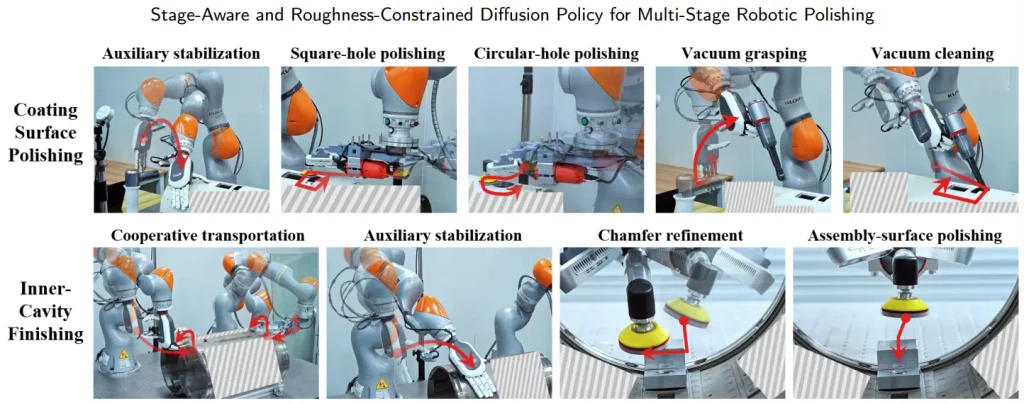
Once the robot began working on its own, it used camera images and force readings to recognize its stage and adjust its speed and pressure accordingly. It finished 94% of its subtasks, while a robot trained on the same data without stage tracking managed only 75%. It was also much better at knowing when to move on to the next step.
So far, we’ve looked at how robots adjust when something changes during a familiar task. But what happens when a robot enters a place it has never seen before? Think of a new home where the cupboards, drawers, and dishes are all in different places.
A robot trained in just one home can get very good at working there. It may learn where the sink is or how a particular drawer opens. But those details may not help when it enters a different home. To handle new surroundings, adaptive robots need training data from a wider range of environments.
An interesting example is Physical Intelligence’s π0.5 model, which shows how training across many homes can enable robots to handle new spaces. Its training included mobile robots doing household chores in about 100 different homes. The rest came from other sources, including different types of robots, lab recordings, web images, and step-by-step labeled tasks.
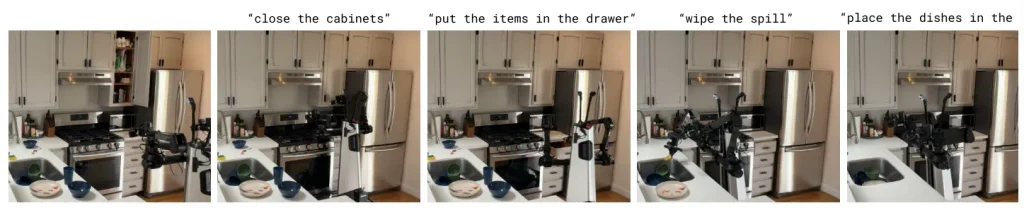
To see how well this training prepared the robot for new surroundings, the team tested it in homes it had never visited. The tasks included putting dishes in the sink and making a bed.
They also compared versions trained on data from as few as 3 homes and as many as 104. The results showed a clear pattern. The more homes the robot learned from, the better it performed. With data from 104 homes, it performed about as well as a version trained in the test homes themselves.
More homes in the training data means fewer surprises later. A robot that has learned from lots of different spaces can walk into a new one without leaning on details from a single familiar room.
A robot that can grasp an object on the first try is great. But what if the object slips, or the grasp misses completely? A robot trained only on smooth, successful runs may know exactly how to pick up a part when everything goes as planned. When something goes wrong, though, it may have no idea how to recover.
That’s why successful demonstrations aren’t enough. Robots also need to learn from mistakes, see how people fix them, and figure out what to do when a task goes wrong but can still be finished.
Three kinds of data can teach a robot what to do when things go wrong:
Researchers are also finding ways to teach robots using both successful and failed attempts. For instance, Physical Intelligence developed a method called Recap and used it to train its π*0.6 model.
The team labeled each attempt as a success or failure and used a separate model to score each task moment. This helped the robot tell which actions brought it closer to its goal and which ones set it back. On top of that, the team kept failed attempts in the training data instead of throwing them away.
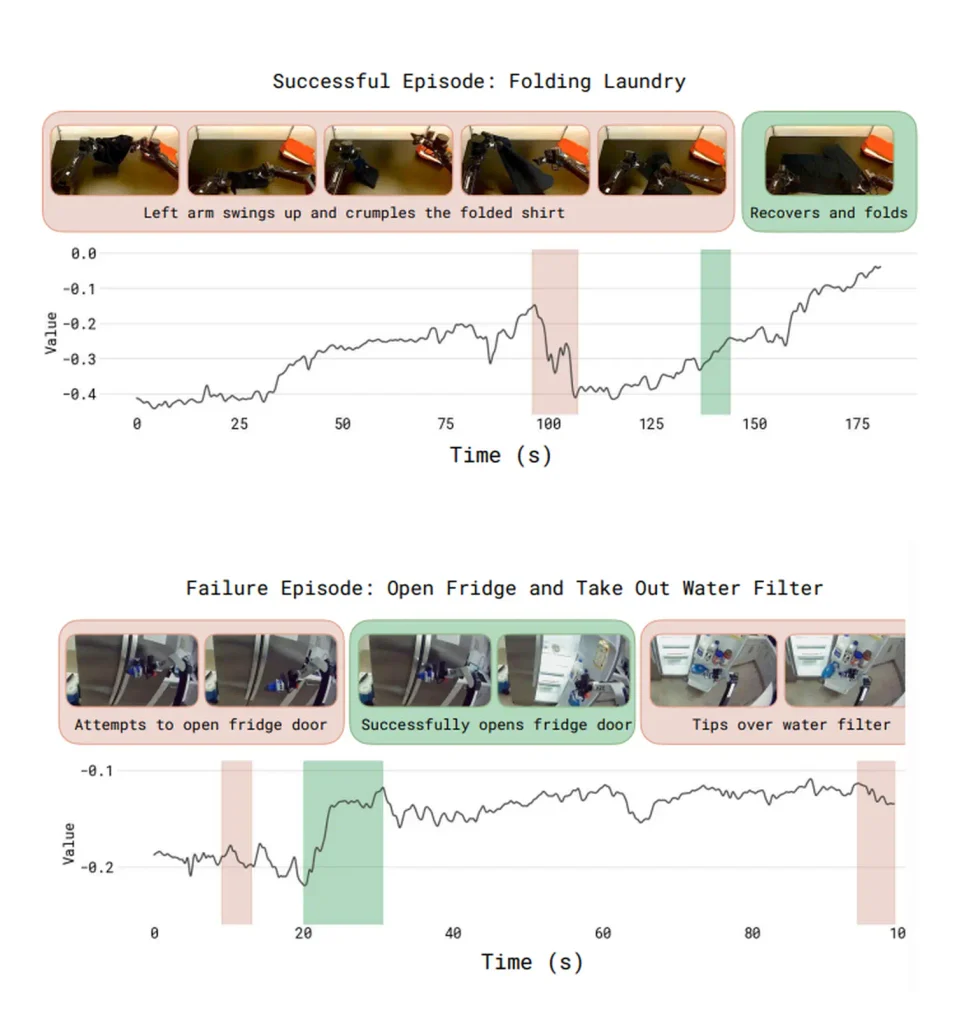
This approach made a noticeable difference on difficult tasks, such as making espresso and folding different types of clothes. The robot did more than twice as many tasks per hour and made espresso for 13 hours without stopping.
For data teams, the takeaway is clear. Successful demonstrations show a robot what to do, while failures, corrections, and recoveries teach it how to respond when things go wrong. Including these moments in training data gives a robot more ways to learn than just successful attempts.
So where is all of this heading? Adaptive robots are starting to show up in jobs that robots used to stay away from.
Factories have long relied on robots for jobs that follow the same steps every time. Adaptive robots are opening up more varied work, such as loading packages of different sizes and shapes or switching to a new product every few weeks. These jobs have often been too unpredictable to justify setting up fixed automation.
That’s starting to change as robots get better at handling variation. In a recent survey of more than 1,600 executives, 60% said physical AI will make robotics viable in areas where robots were once impractical or impossible to use.
The market is growing too. The adaptive robotics market was valued at about $20.6 billion in 2025 and is expected to reach $115.3 billion by 2033. Some of that growth is already showing up in places like loading docks.
For instance, FedEx is using AI-powered, two-armed robots to load trailers at its hub in Hagerstown, Maryland. Packages arrive in random order and vary in size, shape, and weight, so the robot has to respond to each one as it comes. It uses vision, depth, and touch to decide where to place each package, using space efficiently and keeping the load stable.
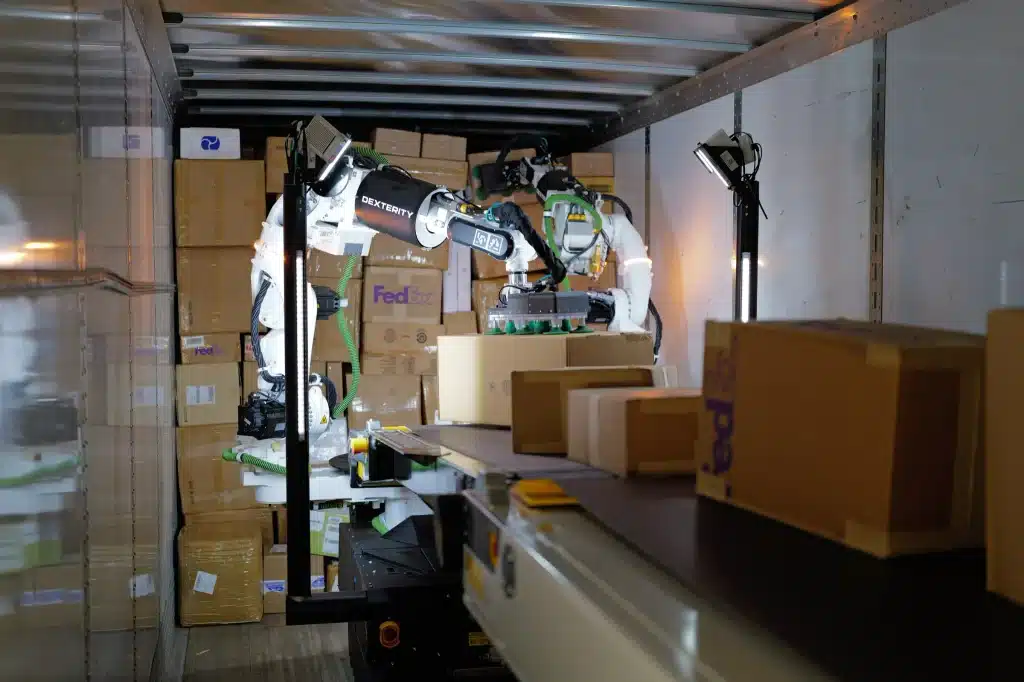
FedEx plans to expand trailer loading and unloading to several more US hubs over the next few years. But each hub has its own mix of packages, layouts, and working conditions. To work reliably everywhere, the robots need training data that covers the different situations they’ll run into on the job.
Adaptive robots need to learn from a variety of objects, settings, and situations. One type of recording can show only part of what happens during a task, so teams collect different kinds of data to give robots more to learn from.
Collecting all of that in-house takes time, equipment, and trained operators. Objectways makes it easier by collecting robotics data for teams building robots and embodied AI. Here are three types we work with and what each one shows.
Teleoperation data records how a person guides a robot through a task. Our operators remotely control robot arms through everyday tasks like sorting, stacking, and folding. Each session shows how a task is done with different objects and setups, so robots get plenty of examples to learn from.
UMI gripper data captures how people handle objects without a robot involved. A person uses a handheld gripper to record grasps in everyday settings. Since no robot is needed, this data can come from a much wider range of places and situations.
Depth data shows how far away objects are, giving the robot a 3D view of its surroundings instead of a flat image. Our depth recordings focus on the harder moments for robots, like failed attempts followed by a retry, rare edge cases, moving scenes, and soft objects that change shape when handled.
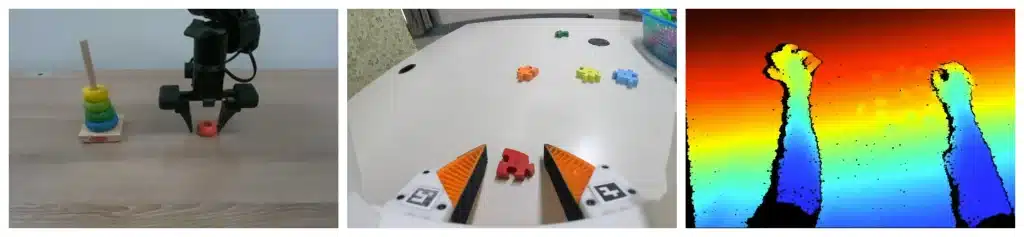
Each type adds something different. Teleoperation shows how a task is performed, gripper recordings capture how people handle objects in everyday settings, and depth data shows the 3D scene and how it changes. When combined, they give robots a much better idea of what they’ll run into on a job.
The type of data matters, but so do the moments each recording captures. A successful run shows a robot how to complete a task. A missed grasp, a dropped object, or a successful retry shows it what to do when things go wrong.
Here’s a closer look at four things to include when collecting data for adaptive robots:
These details show both how a task should go and what can happen when things don’t go as planned. It’s best to capture them during the first data collection session rather than adding them later. Careful data annotation, including labels for task stages, failures, and sensor readings, then turns the recordings into something robots can actually learn from.
A robot can handle only changes it has learned through training. If a bottle rolls out of reach or a package arrives in an unusual shape, the robot needs examples of situations like these to know what to do.
Training with only successful attempts may leave a robot unprepared for dropped objects, missed grasps, or unexpected changes. Including these moments gives the robot more examples to learn from.
That’s why it’s important to collect data that includes different settings, mistakes, and recoveries from the start. This gives robots a better chance of handling the changes they’ll face on the job.
Building robots that need to handle real-world changes? Reach out to Objectways to learn more about our robotics data collection services.
Adaptive robotics is the field of building robots that sense changes around them and adjust their actions in real time. Instead of following a fixed program, these robots learn from training data that shows them what can change, along with human corrections and recorded failures.


Explore how robotics in logistics handles structured and unstructured tasks, from warehouse automation to truck unloading, and why real-world data is crucial.
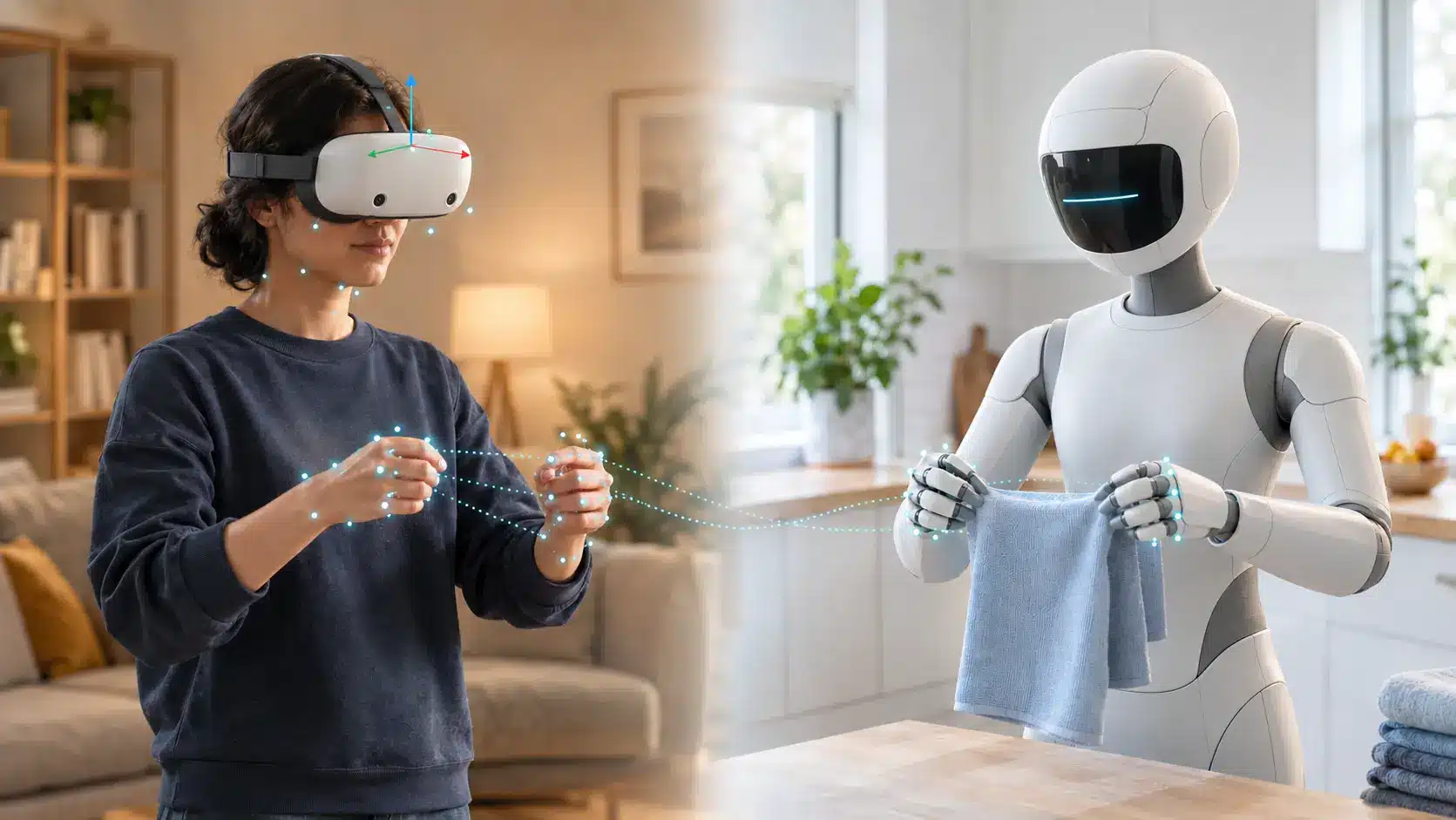
See how SLAM VR tracking works inside a headset, where it fails, and why a drifting head pose weakens egocentric and teleoperation data.